“My people won’t let me take a day off,” confessed a colleague.
“What do you mean “won’t let you?” I asked.
“I mean that they call me and they hunt me down. They will not leave me alone.”
 “Well, what are you doing about it? How are you defining and defending your boundaries?” I asked.
“I don’t get you. What are you talking about?” he replied.
“How clearly have you stated when you are available and when you’re not? How well do people understand your need for time off, for Sabbath? How is your SPRC (Staff-Parish Relations Committee) helping the congregation understand your boundaries and limits?” I explained.
“Pfft! My SPRC is part of the problem. They want me to be available 24/7. I don’t have boundaries. I am at the mercy of my church. Guaranteed, if a problem is going to happen in the week, it will happen on my day off.” he lamented.
“And what would happen if you weren’t available to respond?” I asked.
“Oh, I don’t know. They won’t handle things without me. This church would be perfect if I just didn’t have to deal with the people!” he concluded.
But this is a huge problem. The church is the people. Most pastors (in The United Methodist Church, the majority are introverts) would thrive in an environment where they only had to preach, prepare worship, study, prepare lesson plans, envision bright futures, and think deep thoughts about God. Take away all the endless meetings, phone calls, emails, unexpected visits, untimely trips to the hospital and mortuary, petty conflicts, and you’re left with heaven — not church. Church is a glorious ball of human relationship goo — an amorphous blob of competing and contradictory hopes, dreams, demands, values, expectations, idiosyncracies, eccentricities, and dysfunctions. Pastors are called to — and ask to — be immersed in just such a milieu. It is interesting how many of us end up resenting the very thing we choose to do…
 I am a heavy advocate of both family systems theory and emotional intelligence. The book Generation to Generation by Edwin Friedman is a classic text on the congregation as a family system, and Friedman dissects the good, the bad, and the ugly of congregational dynamics. It should be required reading for every clergy and laity leader in any church. Equally valuable are the multiple approaches to emotional intelligence offered by Daniel Goleman and cohorts: Emotional Intelligence, Social Intelligence, and Primal Leadership. The core of emotional intelligence is the fourfold focus and mastery of self-awareness, self-management, social awareness, and relationship management. It is dependent on healthy self-differentiation and actualization. It requires leaders to take responsibility for what happens to them, and to choose to engage in healthier, more productive ways in their organization. These are incredibly important skills for those in pastoral ministry to develop.
The work of the church is relatively straight-forward and simple, though monumentally challenging. It is the relationships within the church that are most difficult and require the greatest amount of time, energy, and engagement. It is never enough for clergy and laity leaders to understand themselves and their own leadership skills, styles, and passions. Effective leaders are also aware of and understand the personalities, perspectives, and passions of those they lead and serve as well. Personality type-indicators, such as the Myers-Briggs (MBTI) or the Enneagram can be revealing and open people to better understand group dynamics. Behavior-style indicators 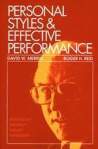 such as Leadership and Interaction Styles or Personal Styles & Effective Performance can be extremely beneficial. Gallup’s Strengths Finder 2.0 is another way to help groups better understand and value the diversity of approaches. On the spiritual side, spiritual gifts discovery and explorations of diverse spiritual types are helpful (see Equipped for Every Good Work for more on each). Basically, there is some value in exploring any of these subjects together as a group.
We talk a lot about diversity in this culture, but generally we look at race or gender or age when we do so. But there is great diversity even within a relatively homogenous group. As an example, if there are twenty spiritual gifts and sixteen personality profiles and four fundamental behavioral styles and eight basic spirituality types, that means 10,240 different possible combinations of gifts, types, and styles. Each of these is at a unique point of development and maturity. This kind of group discovery is not about labeling or categorizing people, but about deepening the understanding of why people think, act, and feel as they do. With deeper understanding comes a better opportunity to navigate the pressures and tensions of shared leadership and decision making. It allows each person space to be him- or herself and it helps others understand where they’re coming from.
Healthy relationships take hard work. But healthy relationships will not happen without healthy individuals. Leaders must take responsibility for their own maturity, health and well-being. Leaders must understand themselves — their strengths and weaknesses, their needs and motivations, their limits and the lengths they are willing to go to succeed. Leaders need discipline — and they need to set boundaries for themselves as well as for others. Leaders must become active in their own development, not merely reactive to the external forces that act on them. Leaders need to cultivate healthy relationships with others. This includes setting ground rules for acceptable and unacceptable behaviors. Groups need to covenant together what they will tolerate and what they will not. Strong, healthy, productive relationships do not happen by accident — they require the commitment and hard work of everyone involved. People ARE hard. That’s what makes us interesting. But when we get relationships right, church is not only easy, church is a joy.


 FaithQuest Revisited
Leave a comment