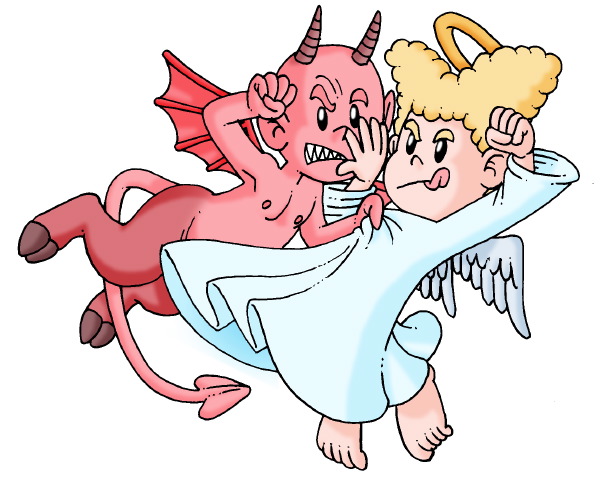
 This past week I have been embroiled in discussion and debate about our openness to highly intelligent, well-educated people in our United Methodist Church. First, I have been surprised by the number of people from our churches who think poorly of smart people — assuming that they deserve anything that happens to them. Beyond this, however, many people want to resolve the issue by creating a false dichotomy. Here are seven quotes from emails and conversations I’ve had this week:
…but, which would you rather be? Smart or good?
How would you prefer to be remembered — as a saint or a theologian?
If I need to choose between facts and faith, I’m going to play it safe and go with faith.
Human knowledge will always be limited. Divine wisdom is superior to human knowledge in every way.
If I want to understand the mysteries of reality, religion will give me meaning while science will only provide information. Smart people can explain how things work, but they aren’t always as good at the why questions.
When I die I would rather look back at my life and know that I was a “good” person, not a genius.
The higher a person’s I.Q., the greater their scepticism, their disbelief, and their contempt for real faith.
Each of these comments appear based on certain assumptions. First, faith and intelligence seem incompatible in some people’s minds. There is a “forced choice, either/or” quality to most of these comments. Apparently, an individual may be intelligent or faithful, but not both at the same time…
Second, implicit in these comments is an assumption that seminary educated pastoral leaders are either moderately ignorant or lack “real” faith. If one must be either a saint or a theologian, theologians must be riding the rail to hell.
Third, “doing good” seems grounded in simple-mindedness rather than higher reasoning functions. Thinking and acting seem disconnected in many of these comments.
I’m not sure where the dissociation comes from. Why can’t we aspire to be both wise and smart, faithful and rational, inspired and intellectual? Where does the distrust of intelligence come from? Is it possible that a theologian could also be a saint? Might a faithful Christian be both good and smart? It is my assumption that God would like us to be both — that faithfulness and good stewardship require that we make the most of both mind and spirit.
My highest vision goes something like this: we fearlessly apply the most rigorous processes of reasoning and critical thinking to our Christian faith; wrestling with contradictions and engaging mysteries wherever they occur. We work to reconcile the physical, the metaphysical, the rational, the trans-rational, the empirical and the ethical at every opportunity. We openly discuss, debate, discourse, dissect and dissent with voices and minds from the widest possible range of disciplines. We honestly acknowledge what we don’t know, what we choose to believe, what is merely opinion, and what makes the most sense. At the other end? A faith that is strong, relevant, integral, reasonable, and respectful of others — and a faithful people unafraid, unashamed, and unshakable in their beliefs.


 FaithQuest Revisited
Leave a comment