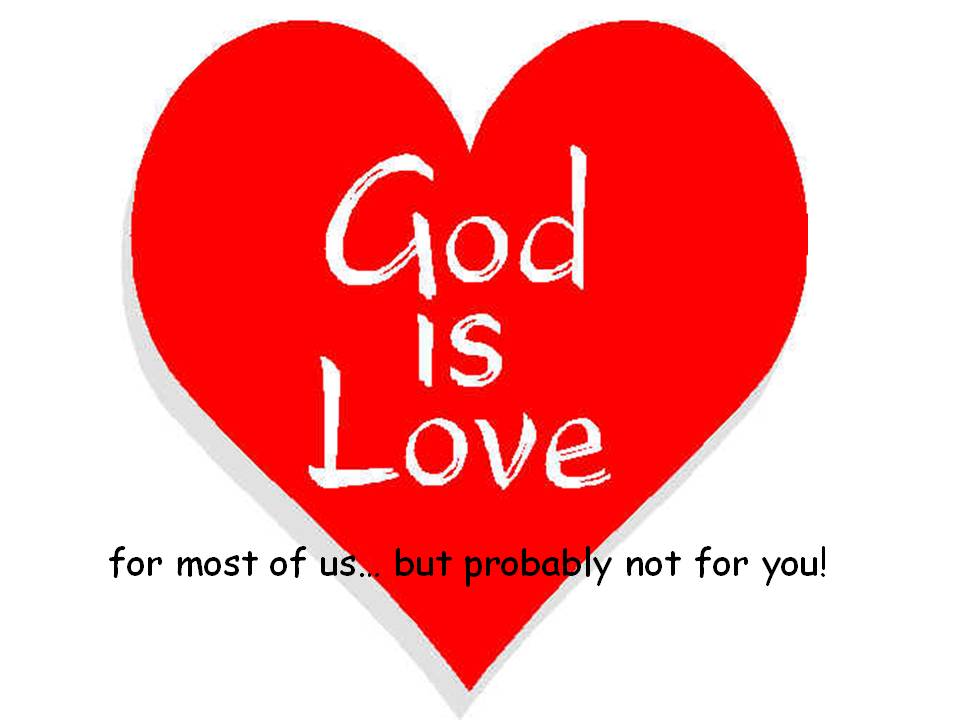
 I’ve gotten in trouble lately for an idea that I thought was fairly safe, but turns out (as many ideas do) is theologically open to debate. I suggested that human beings, created in the image of God, might be children of God. I do have to acknowledge that this is a theological perspective that does not align well with the “truth” of other perspectives. I have been “taught” that no one can be a child of God until they agree to be a child of God — that parentage is dependent on the child deciding to be a child. I have been “instructed” that until we accept a narrowly defined set of acceptable Christian standards, we cannot “qualify” as children of God. I have been chastised by “theological experts” that children of God has nothing to do with God’s intention, but only the human response. I have been corrected by those who know the truth that we have to completely ignore the whole of Christian and theological thinking in order to pick and choose a few isolated passages of scripture and a limited theological perspective that limit our acceptance of “children of God” to include only those we like and with whom we agree.
And the Bible is no help here, because it can be used to defend and define all the various theological perspectives. This is a classic “decide what you want, then find the evidence to support it” argument. For me, the logic is simple. From this perspective:
- if all things have their origin in God, and
- if human beings are created in the image of God, and
- if our humanity separates us from other orders of primate, fish, and fowl,
- then human beings are legitimately “children” of God (metaphorically speaking)
Through this logic, we don’t pick our parent, we simply are “children of God” by being part of the human race. Ah, but there are other arguments.
Indeed we are “created” by God, but we are born into a broken state, and our restoration into the family depends on two things: we must be worthy and we must be adopted. Now, worthiness is a slippery slope — defined differently by different perspectives to require very different things. At one end of the spectrum, all one has to do is say “yes” (much like joining most churches — nothing more is required than nodding one’s head at the appropriate moments) and they are in. All along the spectrum to the other end, the “yes” has strings attached — “yes, and…,” and “yes, but…” “Yes, and,” requires that we say “yes” and that we be good children, minding our manners and behaving like civilized little men and women. The rules of the house dictate who are the “good” children and who are the “bad” children; who gets cake and who doesn’t, if you will. It is all about who is deserving. Further on is the “yes, but,” where we move from deserving to eligible. This is the limit on adoption, stating that there are some who are disqualified from ever being children of God because some aspect of their nature makes them “sub-human.” Since a dog or a cat cannot be a child of God, then neither can anyone we deem ineligible. Throughout history we have played this game with money-lenders, tax collectors, racial and ethnic minorities, women, the mentally and physically challenged, the mentally ill, slavery, domestic abuse, and our current flavor-of-the-month, homosexuality. An embarrassing survey of our Christian history reveals the repetitive cycle of a majority abusing power to dehumanize a minority (or occasionally a power-trust minority oppressing a powerless majority). The initial thesis put forth is simple: sub-humans cannot be children of God, thus to label a group subhuman ends discussion and debate. To formalize our modern decisions, we turn to a pre-modern, non-Western, pre-enlightenment text to select archaic thinking that will “prove” our actions to be biblically and theologically sound. Occasionally, we transcend such irrational thinking, setting aside the Bible to realize that perhaps God will not punish “innocents” such as children and the mentally challenged and mentally ill, who have done nothing wrong and don’t deserve such harsh injustice, but these occasions are rare. We also have generally had the guts to say that the Bible is actually WRONG in its endorsement of child abuse, slavery, slaughter of innocents, oppression of women, and genocide. We still waffle on things like capital punishment, divorce, power issues around race and gender, but we are at least questioning their validity. Today, virtually no one I know even pauses before wearing mixed-fiber fabrics or eating a cheeseburger or slice of pepperoni pizza (neither of which existed in the time of the Patriarchs, but both of which are forbidden by scripture. Hmmm….)
There is also a case to be made for “Children of God,” being simply a club name — something along the lines of “the Screaming Eagles,” “the Fighting Tigers,” or the Rotary or the Masons, but I’d rather not go there. The hard lines of who belongs and who doesn’t in such clubs/teams make it an ultimate “lose/lose” path.
I am not saying that any one perspective is right or wrong — that’s not my place. I know what I believe about God’s love and our place as “Children of God.” I base my belief in large part on Paul’s explanation that Christ has broken down the dividing walls of hostility and that those once alienated and ostracized have been reclaimed — that there is now no longer Jew or Greek, male or female, slave or free, but through Christ there is unity, and that while many in creation may not realize they are children of God, that in no way mitigates God’s love for and acceptance of them, and places the burden to extend God’s grace and love on those who do acknowledge that they are children of God and brothers and sisters of Christ Jesus. This “I Believe,” yet I try to honor and respect those who believe differently. I do wish those who disagree with me could refrain from framing our disagreements in terms of them being right, and me being wrong — them being enlightened, and me walking in darkness.
I close with a question I received in an email last Friday, that I have a very clear and simple answer to. In Wisconsin, we will be having a conversation about homosexuality at our Annual Conference session in a couple of weeks. I have been saying to people this is a time for listening and understanding and engaging in civil discourse — that in a couple of hours, we will not be able to arrive at consensus on such an emotionally charged issue that runs the gamut on the theological spectrum. I believe this “issue” isn’t an issue at all, but is a classic example of our inability as Christian community to navigate the subtle and not-so-subtle difference between truth and opinion. I believe this is an abdication of doing deep theology, where we prayerfully discern what is right in our day instead of defaulting to a totally different culture, time, place, worldview, level of rational understanding, and apprehension of reality. I believe it is not as important to win an argument as it is to learn to disagree well; that civil discourse is bedrock foundation for any future decisions we might be challenged to make. Many have told me this is a cop-out, that civil discourse is a waste of time. One person frames it this way:
Talking about sin without naming it sin and requiring people to cease in their sin is wrong. We know what the Bible says. We know what’s right. There is no opinion here. Only truth. And those who reject the truth must not be allowed to dictate to those who accept the truth. Do you honestly believe that God wants everyone in heaven? Do you believe for one moment that He would allow sinners to enter in and poison the true children of God?”
My answer? Yes, I do believe that God wants all of us (children) to be reconciled into one holy realm. But I believe that the failings, inadequacies, brokenness and misunderstandings that define our humanity are insignificant in the presence of God. God (in my belief) is greater than any sin, any weakness, any disease, any mistake, or any wrong I possess, and in the presence of divine love, all will be purified.
I truly don’t have time to police the wrongdoing of others; I need to stay busy becoming the person I need to be. Worrying what someone else might be doing wrong is simply an abdication of my responsibility to make sure I am doing no harm, doing all the good I can to all the people I can, and that I am continuously striving to strengthen my relationship with God and the body of Christ through my own spiritual formation and development (thank you, John Wesley). For me, the only way I can give time to judging and condemning others is time I take away from making sure my own house is in order. That’s the choice I make for myself — and part of that choice is to see every other person I meet as a child of God, a brother or sister (whether in the faith or out), and a person God charges me to love.


 FaithQuest Revisited
Leave a comment