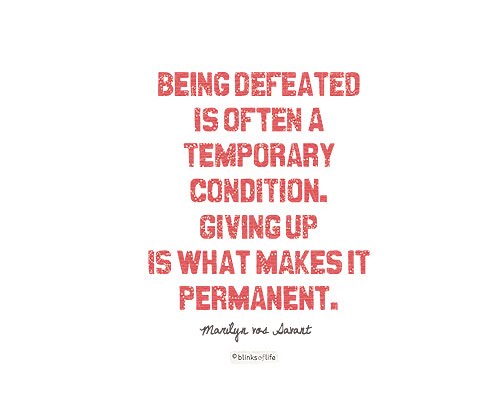
 I watched some of the Global Leadership Summit videos over the weekend and have to admit they depressed me. It felt like another missed opportunity. Hopeful rhetoric infuses a blurry and misdirected vision for a limited and inwardly focused future. It is all about us — and not all of us. Transformational mission is off the table; we want to focus on increasing the number of “vital” congregations (with the definition of vital being “big and busy”). Evangelistic scriptural holiness is replaced by inviting people to The United Methodist Church. The fundamental practice of the means of grace is reduced to institutional accountability. Spiritual leadership is limited to clergy. Unleashing the potential of the denomination is hinged to making dysfunctional agencies cost less and work more. If we can just preserve our institution we will somehow figure out what we ought to be doing…
I link my misgivings about the Leadership Summit to an ever-increasing number of people talking about the need for “resurrection” in The United Methodist Church. This troubles me, especially when I hear it coming from our bishops and agency leaders. First, it is a clear admission that they believe we are dead. You cannot resurrect that which is living, so our church must be dead. This is a painful assault on the hundreds of thousands of men and women who have given their life to Christ and their service to The United Methodist Church. It demeans and denigrates those who faithfully fight to do good work locally and around the world. We may be injured, but we’re not dead, and resurrection talk is nothing more than surrender and abdication on the part of leaders. They may choose to give up on the church, but there are many of us who aren’t ready to lie down yet. There are many of us who believe we are in exile rather than death’s domain.
The church is in exile — we are stranger’s in a strange land — and a severe challenge to our future are the number of people who accept our displacement as normal. We have both accommodated and assimilated the values of our captors. Agency heads who hire crass marketers to give us a “brand” instead of an identity; researchers who focus on decay, death and decline as motivation to change; leaders who suggest we track statistics instead of pray, evangelize and serve; limiting our leadership focus to clergy in a time of laity empowerment; and hosting meetings that cost hundreds of thousands of dollars to talk about how poor our stewardship is are a few examples.
The scene from Monty Python and the Holy Grail comes to mind where plague sweeps through the villages and men pull carts through town calling, “Bring out your dead!” One man carries his father out to the cart, who is swinging over his shoulder saying, “I’m not dead yet. I’m not dead yet!” I am discouraged by the number of leaders in our church ready to cut our losses and simply toss the church on the heap. I don’t believe they do this for any reason beyond losing hope and lacking vision. We don’t remember what “home” looks like any more — we’ve been gone too long. The church growth movement of the late 20th century corrupted our values. We adopted one hundred and one business concepts without translating them to the church in spiritual language. We turned our seminaries into academic proving grounds, where practical ministry is viewed as a pathetic waste of teaching time. Boards of Ordained Ministry ceased trying to cultivate good leadership and instead assumed the role of weeding out bad. Our energy shifted from “becoming” to “being,” a shift from continuous improvement, learning and development to managing the status quo to survive another day. As a denomination we have stopped moving toward a Promised Land. Instead, we wander in the wilderness.
It may be true that “you can’t go home again” — what we left behind is forever changed. Our future does not lie in our past. Yet, we can still learn from our past to create a new future, to come home again for the very first time, if you will. At our best, United Methodists are a people who give, who serve, who witness. Wesley’s vision of spreading scriptural holiness across the land may need some redefinition and translation, but it is a homecoming worth exploring. Our movement was never to build churches but to create community. Even communities that lacked a sanctuary to worship in often had a fellowship hall in which to gather for spiritual formation and Christian education. And the formation and education wasn’t “information” based, but experiential and practical — teaching people how to live their lives (behavior) not simple what to think (belief). Our focus didn’t used to be on what we shouldn’t do and shouldn’t be and shouldn’t believe — we didn’t have time to waste — but on what we could do and could be and could believe. Today we spend much time talking about what we don’t have, and what we can’t do and afford, and how much we’ve lost — what a bummer. We live in despair that The United Methodist Church might cease to exist, so instead of strategizing how we might most effectively be the hands and heart and voice of Christ, we focus on our processes, practices and procedures to preserve the institution.
We continue to think in reductionist, “either/or” terms — grossly limiting our potential. I keep hearing the phrase “adaptive challenge” and it reminds me of thinking from about 30 years ago when authors drew the false dichotomy between “technical” and “adaptive” leadership. The point — as I remember it, like I say this is old stuff — is that we often make the mistake of looking for technical solutions to problems requiring adaptive responses. For example, if you break a bone, the solution is to set the bone — a technical solution to a specific problem. But if a person comes in with a swollen, bruised arm, but no sign of a break, a doctor must probe a bit before making a diagnosis. Merely splinting the arm and putting it in a cast would be irresponsible — you can’t apply a technical solution to every problem. The point made — with some validity — is that effective leadership requires the wisdom and discernment to tell the difference between situations requiring technical and adaptive responses. But what people realized almost immediately (back in the 1980s) is that most situations require both in dynamic tension. Take driving a car as an example? Does driving a car require technical or adaptive response? Yes, is the only answer. There are very technical, very specific processes in the act of driving. Creativity will not be your friend — there are some parts of the car that will only do what they were designed to do, no matter how adaptive you choose to be. Ah, but there are a thousand variables to driving that must be taken into account. Road conditions, weather conditions, time of day, other drivers, kids playing ball, animals, etc., make even a drive to the corner store a potential adventure. If you cannot apply adaptive thinking/responding you should not ever drive. Either/or thinking will kill you or someone else.
So, today I keep hearing thirty-year-old “either/or” thinking that I haven’t read anywhere since Ron Heifetz’s twenty-five year-old classic, Leadership Without Easy Answers, being spouted as “new” wisdom to guide our church. No wonder so many people think we need resurrection instead of restoration! We are so far behind the curve that we’re motionless and inert.
Coming home will require leadership. But post-exile leadership needs a clear focus on our identity and purpose — who are we and why are we here? What are our core values and related central beliefs? Does our polity actually support and illuminate our doctrine? Do we have a grasp of our theological task? Are we aligned with our Social Principles and are our principles relevant? Can we make the practice of the means of grace — at the very least the basics — prayer, study, service, accountability and celebration of the sacraments — central to our common life? Can we let go of the things that divide us long enough to rally around Christ? We don’t need more foot-shuffling, waffling, hemming, hawing, embarrassed awkward pauses, superficial rhetoric to remind us that we are in the wrong place at the wrong time. But we’re not dead, we’re simply lost. We don’t need resurrection (yet), but reform, renewal, restoration and a return to what we do best.


 FaithQuest Revisited
Leave a reply to Cindy Thompson Cancel reply