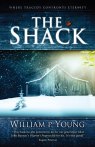
shackWithin the past week I have received four different emails regarding William Young’s, The Shack.  The attention this book receives is interesting to me, and I posted a review in May 2008 that voices a minority opinion — while I observe a widespread, gushing adoration for the book, I found it to be a poor book at best.  In response to those asking for the review to be made available again, I am posting it here.

Periodically, I will share some reflections from my reading journal — which I keep in hope that by writing about what I read, I will somehow retain and remember things that would otherwise disappear in a short period of time.  Often, books are released that become very popular, very quickly, and I am often asked my opinion (for what it’s worth…)  Here are my notes on William P. Young’s, The Shack.

When I was eight years old I liked nothing better than the sugary treat of a Hostess Twinkie.  Soft, sweet yellow cake with an even sweeter creamy filling – no thought of nutritional value or long term health consequences, just simple enjoyment of something that tasted so good.  Left to my own devices, I would have made a steady diet of Twinkies – which in no way would have been good for me.

The Shack is a spiritual Twinkie – sugary sweet with little or no nutritional value.  The fantasy tale is very unevenly told, but framed as a might-have-happened second-person narrative (Mack is the narrator/protagonist; Willie is the narrator/author), the spiritually naïve and immature might find this to be a deeply satisfying treat.  Without a sound theological basis or the application of even the most basic critical thinking skills, a reader might mistake this as more than just a fairy tale.

There are a few specific things I find disturbing and potentially dangerous to newbies to the Christian faith.  First, it is deeply rooted in the “me-and-my-buddy-God” privatized spirituality of 21st century USA.  Traditional church is both demonized and discarded – as long as the individual is in relationship to God, Jesus, and the Holy Spirit, then a real Christian community is expendable.  To have a faith-based network in which to test and explore the faith, to have a sacramental life, to have a history and tradition, and to have grounding in rituals and practices – these are dispensable options, not deeply important to the faith.  It is what many people mean when they say they are “spiritual, but not religious.”

Second, God’s thinking and teaching is an expression of the rampant “pick’n’choosism” of today’s culture.  The author/narrator shares the revealed truths of “Papa,” Jesus, and the Spirit – a scattershot selection of feel-good ideas more redolent of New Age spirituality than a biblically or theologically grounded Christianity.  Oh, there are wisps and tatters of scripture crow-barred into the story, but they are manipulated in service to the author’s neo-Christian philosophizing.

Third, the appalling narcissism and arrogance cause the story to constantly bog down.  The author/narrator deconstructs the Trinity (actually, represented as four persons…) as rather unremarkable human manifestations that are easily accepted and understood.  It would not be in any way unusual to pop into the local diner to find Mack shooting the breeze and having coffee with his ol’ buddies Pappy, Junior, and Spooky.  The author tries to tell us how special these three figures are, but then paints them in very two-dimensional, unimpressive colors.

The narcissism continues in a very distressing and hurtful way when the murder of an innocent child is used to make an observation about God and faith that is deeply offensive to anyone suffering such awful tragedy.  The whole purpose of this visitation is not to help Mack and the family to honestly cope with the tragedy, but merely to feel better about it.  God tells Mack that his little girl was fine with what happened to her because Jesus and Holy Spirit were with her so he can let go of the thought that she might have been scared, traumatized, or in pain.  The bottom line message offered to Mack is, ‘you can feel better about this because it really wasn’t so bad.’  This is a horrible scene in the book and an insult to a deep, abiding faith.  Many “contemporary” Christian churches follow this simplistic and puerile path – don’t deal with the realities of a broken world, merely chant how much Jesus loves you and how everything is really okay.  No personal responsibility, just blessed assurance.

Fourth, its lack of substance and depth make it an easy target for the Sam Harris’, Richard Dawkins’, and Christopher Hitchens’, who delight in mocking the ignorant, irrational, and inconsistent beliefs of the spiritually immature.  When a prominent or popular voice produces a piece like The Shack, it is truly a gift to these people who anxiously await the next harvest of low hanging fruit provided by those promoting an insupportable, childish vision of the Christian faith.

Fifth, I was personally offended by the feeble attempt to pander to modern multiculturalism – Papa is a black woman, Jesus a ruddy Middle Easterner, the Holy Spirit is Asian, and Wisdom/Sophia is Hispanic/Latino.  In each case, the representation was pedestrian and trite.  In an age of deep need coupled with intellectual sophistication, such depictions of “little gods” are not helpful.  If we must anthropomorphize God, then at least make the depictions real and not embarrassingly plastic caricatures.  When God – in whatever form – is nothing more than a meddling nanny spouting simplistic aphorisms and clichés, we are in bad shape.

All surface, no substance; all breadth, no depth; all sugar, no nutrition – that’s what The Shack was for me.  In a culture where many Christians get their spiritual education from the likes of Joan of Arcadia, Touched By An Angel, The Passion of the Christ, the 700 Club, and the Left Behind series, this is not merely a poor book, but a potentially dangerous book – able to further obfuscate the Christian faith and teach people that a personalized, privatized, comfortably customized, and arbitrary relationship with God is what religion is really all about.  Sadly, The Shack doesn’t even meet the lowest faith standard of our modern culture (”I’m spiritual, but not religious”) – it is neither deeply spiritual, nor religious in any meaningful way.

20 responses to “A Minority Opinion — Shack Attack”

  1. doroteos2 Avatar
    doroteos2

    Man! I knew picking on The Shack would get me in trouble. Hot diggity, it has. I received an email from someone wanting to remain anonymous, but I got permission to post part of the comments made. This person writes:

    “Are you aware that some bishops are recommending this book? Do you know what that says? We need leadership. We need people with a good education and common sense to look at what is out there and apply a critical eye… helping separate the sheep from the goats, the good from the bad. We need leaders to help us solve problems, not create new ones… You and a few others are paying attention. Thank you for helping us see the bigger, the deeper, and the most important issues in this (The Shack).”

    At one level, this is all a matter of opinion. At another, it goes to core beliefs, our vision for Christian formation, and our definition of Christian faith. These are huge issues, and my hope is that we can do a better job addressing them than Young’s, The Shack.

  2. Jay V Avatar

    I originally approached The Shack with a great deal of skepticism, and continue to be aware of its limitations as both a book of theology and/or entertainment. To be fair, the author never intended to write great literature, and if the back story is true this book served its original purpose which was to talk to the author’s kids about the author’s understanding of God. However, though I was skeptical, I choose to lead a conversation group around The Shack mainly because so many folks in the church had read it and needed some place to debrief it.

    The fact is that for many “average” churchgoers, the book goes as theologically deep as anything they have ever experienced in Sunday School or in the pulpit. The average church goer is rarely challenged to deconstruct the meaning and purpose of the Trinity, and this book at least offers a starting point for conversation about such issues as The Trinity, the self limiting of God, the problem of evil, etc. Does it provide answers? Heck no, for which I am greatful. What I have found in the small group context is that it provides a basis for valuable questions that branch off into deeper thoughts and provide the skilled pastor/teacher an opportunity to go deeper.

    The other thing that I think we can’t minimize in the south where I am located is the prevalence of a Calvinistic influenced theology which maintains a negative anthropology and often creates an image of God as punitive, more concerned with judgment than love, and minimizes the place of grace and our ability to resist that grace. For those folks, this book becomes a sort of “New Kind of Christian,” pushing on the assumptions of those forms of faith in a relatively accessible way. Yes, it could do it much more deftly (Young is no Dostyevsky) but what I find it doing is providing a starting place for conversation on Wesleyan theology and a God whose love is so immense that it overwhelms the mind.

    I encourage you to read it again as if you were preparing for a discussion group. Is the book a masterpiece? Nope, not in the least. But there are nuggets scattered throughout the book that lend themselves to good conversation.

    1. doroteos2 Avatar
      doroteos2

      I’m in agreement that it raises important questions, and where there is a safe place to debrief, digest, and discuss what is being said, implied, and described, I think it can be healthy. My problem is that, regardless of the author’s intent, there is strong evidence that many people are accepting it wholesale. In a local Borders, it is prominently displayed in a non-fiction section of religious books. I have seen banner ads for “the true story” of a man’s journey of faith. Once an author lets go of a book, it is the reader’s perception that rules.

      This book is connecting with an awful lot of people, and it can have value when the more spiritually mature mentor the less mature, looking at the story through a good set of theological lenses. This isn’t happening very many places. The conversations I have with people who have read the book are essentially of two varieties: hated the book and thought is was insipid, or loved the book and all it teaches about the true nature of God. Your third way — as an entry point for deeper thought, reflection, and conversation is rarer. I sat through an interminable flight from Arizona recently where the woman behind me was explaining to her seatmate that The Shack confirmed her own belief that God shows up every day in our lives disguised as ordinary people — those you would least suspect — just like on Joan of Arcadia. Her new “friend” asked her if she really believed The Shack and Joan of Arcadia were true, and she replied, “Well, they’re not true, but they’re based on fact.” I think books like The Shack are problematic — not just because they aren’t well written — because they blur lines and offer simplistic, irrational, and uncritical answers to lfe’s most complex problems. Without a safe space in which to test, explore, clarify, and (where needed) refute such ‘answers’ people are left misguided, misinformed, and mystified — all to the detriment of the credibilty of the Christian faith.

      I’ve read The Shack twice and had close to a hundred discussions about it. I confess my own biases toward wanting a story to be well told, so I have a hard time with how poorly written the book is, but looking beyond that, the problems I have with the implied “truths” remain as strong as ever. Do they provide a catalyst for discussion? Yes. So does American Idol and Britney Spears, but I won’t spend a lot of time promoting them either…

  3. JDCPA Avatar
    JDCPA

    I completely and wholeheartedly disagree with your anaylsis of the book, but do agree that The Shack is (as it clearly states on the cover) is a work of fiction that is intended to be a Hostess Twinkie. I enjoyed it for what it is – enjoyment and possibly a point at which to start thinking. For people who are turned off by the idea of religion because they have had a bad experience at a church, The Shack can, if they choose, offer some hope as to how God, Jesus and the Spirit care about everyone. (The Trinity is respected in the book – for not realizing this you probably went into it expecting it to not fit your idea of what a “religious fiction” book should be.)

    With regards to making the Trinity being described the way they are – it is also very clearly stated that God is greater than we could imagine, but comes to us as we need to see God in different forms at different times. God is not always a black woman in this story. At one point, God becomes a father because that is what the character needs at that point in the journey. I firmly believe that God is neither male or female and yet male and female at the same time. God is beyond our understanding – this too is clearly stated on multiple occassions by “Papa”, Jesus, and Sariyu (the Spirit). Casting the characters as different races, while it may offend you, is actually intended to do that, make you think outside of your comfort zone. Don’t you think it’s a little odd that Mack, a white man, would be calling a black woman “Papa?” This is all intentional, in my opinion, to make each person realize that God is so much more than we can imagine.

    With regards to the attacks by Sam Harris, Richard Dawkins, Christopher Hitchens, and others, let them – they are going to spend their time on something, it might as well be on something as inane as attacking a literary piece that makes no pretense about being anything other than a work of fiction. If we are to believe Jesus, we will be persecuted for our beliefs, these are simply people who proclaim to believe yet do the very thing that Jesus warned would happen for following him.

    As far as saying that the daughter was okay with what happened because God, Jesus, and the Spirit were there with her. Maybe you have been fortunate enough to never lose someone dear to you in a catastrophic way, but I can assure that believing that your loved one had some comfort, however small, at the time of their greatest need, helps beyond belief. We are called to forgive, not to forget, but not to judge. That is for God alone, not us. Whatever gets someone to that point, should be okay because frankly you aren’t in their shoes and don’t know what they are going through. I also don’t believe that Papa was trying to say that what Mack’s daughter went through was less than terrible, but that his daughter is now, not at the time of the attack, at peace. For you to read it that way, again, makes me believe that you have been fortunate enough to not suffer loss of a loved one to a horrible event.

    In short, I think your opinion of the book was formed before you opened the first page. You went into it looking for the problems rather than the potential this book has to open lines of communication between the unchurched and the churched. With that type of attitude, I’m curious who you are reaching for God.

  4. Karin Tunnell Avatar

    By the way have you read Quarantine, a novel by Crace? Definitely NOT a shack!!!

  5. Karin Tunnell Avatar

    Yes, yes, yes—spiritual fluff. The quality of the writing is lousy. And what happened to discipleship? I could have sworn that it came from a popular tv evangelist who wants to make us all feel better…
    I will say that the thought of hanging out in a garden all day, while appealing, is just not my experience of faith.

  6. Chris Avatar
    Chris

    But Why??

    Why is this book popular? I can’t figure out the appeal. It is a pretty dorky book. Its like a bad made for TV movie. But its so popular. I don’t understand what it is that people like about it. I’m serious for an answer. Can you tell me why its popular?

    1. doroteos2 Avatar
      doroteos2

      I think its popularity lies in the fact that it is a perfect “fit” for our culture in the U.S. It’s simple, simplistic, and easy. It implies that the purpose of faith is to make people feel better. It absolves us of any responsibility for our actions, and says that when bad things happen, they really aren’t so bad after all. Life is tough, and God, Jesus, and the Holy Spirit exist for one reason — to love us and make it all better. In a world-revolves-around-me society, it is very appealing to know that religion/spirituality is all about “me,” too. A lot of people don’t want to have to think too hard about life, God, meaning, and personal responsibility, so that makes The Shack a perfect book for them.

  7. Angela Uhl Avatar
    Angela Uhl

    THANK YOU! THANK YOU! THANK YOU! I think my friends are reasonably intelligent people, but they are all ga-ga over this book and I can’t stand it. It is a TOTAL embarrassment. I threw my copy away because I didn’t want anyone to think I like it. I just shake my head when people gon on and on about how wonderful it is. I am so glad that you offer such a sensible, balanced review of the many problems that are in the book — I only hope people read it (your review) and listen to it.

Leave a reply to JDCPA Cancel reply