I admit it. I am a worship snob. They say that a little knowledge is a dangerous thing, but a lot of knowledge is worse. And the same goes for experience as well. Knowing what one wants in worship, and having 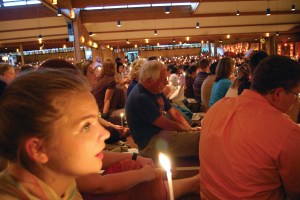 experienced excellent worship in the past, makes it difficult to settle for anything less. There are seven attributes of worship that are important to me, and unfortunately they are scarce in most United Methodist worship settings.
- A strong focus on gratitude and thanksgiving
- Balanced prayer — confession and pardon, intercession, petition, thanksgiving, adoration, and blessing
- Silence
- Affirmation of the faith by the community
- Thoughtful interpretation
- Invitation to discipleship and growth
- Consecration through the sacraments
Focus on Gratitude and Thanksgiving
We call it “celebrating” worship for reason — we have so much to be thankful for, but often gratitude gets relegated to a brief doxology following the morning offering. The goodness of God — the GREATNESS of God — gets lost in a miasma of announcements, performances, perfunctory prayers, readings, recitations, and rote ritual. Energy suffers, passion dissipates, and people leave unmoved and unchanged. This happens most readily when the focus of worship shifts off of God onto us. There are glimpses of gratitude and thankfulness breaks through in dribs and drabs. But the worship that fills my soul and frees my spirit is all about gratitude to God.
A Balance of Prayer
Worship is the brief time when the whole congregation (or, at least, a representative sample) gathers together as community in Christ. Corporate prayer is at the heart of a faith communities sense of identity and purpose. We cannot confess and receive God’s forgiveness together and not be moved. We cannot lift our prayers of intercession and petition without entering into one another’s lived reality. We cannot offer prayers of adoration, praise, and thanksgiving without sharing a vision of God’s goodness. We cannot share signs of peace and blessing without extending a caring heart. Prayer makes us a unique and counter-cultural community. It redefines us and makes us one. Where the pastor does all the praying, or prayer is excised to make room for other stuff, worship loses much of its power for me.
Silence
Where do I begin! A ‘moment of silence’ for United Methodists generally lasts about 13 seconds and often has organ music softly playing in the background. Listening for God is every bit as important as what we have to say to God, but we seldom grant equal time. There is so much crammed into our worship time (hour) that we are much too busy to listen. People get itchy with too much silence, so we give them as little as possible (and heaven help us if we broadcast — there is no way we can allow even three seconds of dead air time). The problem is, we need to quiet our hearts, center our spirits, and attend to the gentle proddings of the Holy Spirit. Good luck doing that when all the bells and whistles (and choirs and liturgical dancers and drama groups and praise bands) are blaring full blast. You may be picking up on my subtle opinion, but for me to be fully present in worship, I need a good measure of silence.
Affirmation of Faith By the Community
‘Liturgy’ means ‘the work of the people.’ It is not enough to go and have worship done ‘at’ us and ‘for’ us — we need to ‘do’ worship together. We need to pray, sing, witness, read scripture, confess, praise, give thanks, and affirm our faith TOGETHER. It is why we gather together, and when someone else does is representationally for the congregation, something significant is lost. Creeds, affirmations, and responsive psalter readings are falling from favor, and many congregational worship leaders have abandoned them altogether. The corporate affirmations of our faith remind us of who we are, challenge us to reflect on what we believe, and help us to learn the core tenets of our faith.
Thoughtful Interpretation
When I enter the sanctuary, my attention turns to God. As I pray, sing, listen to the scriptures being read, and engage in other worship practices, I am constantly reflecting on who God is, what God’s will is — for me individually as well as for the church and world — and what is expected of me as a Christian disciple seeking to live faithfully in the world. I don’t need to be entertained, or wowed, or impressed. I want to hear thoughtful insights based on sound theology and good exegesis. I want to be challenged in my thinking. I want to be inspired by the story and motivated to change for the better. I want my intelligence respected and my spirit provoked. I love questions a lot more than simplistic answers, and I like a good open ended story much better than an empty platitude. I love to listen to people who obviously love God, love God’s Word, and love the challenge of exploring all the mysteries of God.
Invitation to Discipleship and Growth
What does the Lord expect of us? What challenge does the faith make to our individual and corporate status quos? What am I willing to take a stand for? What commitment am I willing to make to grow in my Christian discipleship? These are the kinds of questions I want to be confronted with every time I worship. I want to be expected to ‘stand up for Jesus.’ I want the claim of Christ on my life to be stirred up each and every week. I do not want to leave worship the same as I entered in. I do not want to be comfortable, complacent, coddled or complimented. I want to be challenged and encouraged. That makes worship cook!
Consecration Through the Sacraments
I cannot celebrate the Lord’s Supper too often. I cannot experience too many baptisms, and I love any and all invitation to remember my baptism. These are two of the essential practices that define me as a member of the body of Christ. They inspire me. They humble me. They make me proud. They make me want to be a better person. And the remind me that I am not alone — ever.
I don’t want anything fancy. In fact, I basically just want… the basics. What’s sad is that I have such a hard time finding these things. I find good music and professional preaching, entertaining performances and interesting topics — in the best situations. Unfortunately, I also find an abundance of uninspired sermons, lackluster singing, embarrassed appeals for money and volunteers, and a lot of going through the motions. Like I said, I’m a snob.
What is it that makes worship come alive for you?


 FaithQuest Revisited
Leave a reply to doroteos2 Cancel reply